Trunk and Releases
chant’s delivery model has one branch that every change merges to. A person picks a sha CI passed on it and builds it once for every environment, and that build moves through the environments in order. This page explains the parts and why each sits where it does. The commands have their own reference pages, linked from each section, and the decisions behind the model are ws-103, ws-104 and ws-105.
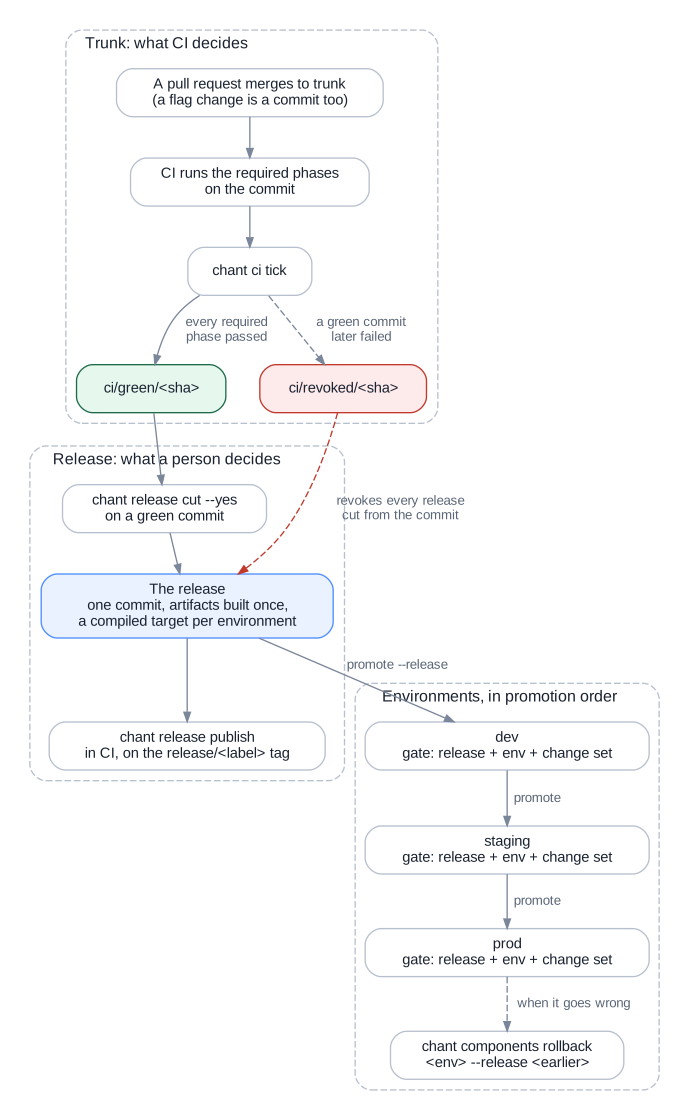
Trunk is the branch every pull request merges to, main unless ci.green.branch names another. There are no release branches. Work that is not ready still merges, switched off behind a flag, so nothing on trunk waits on another branch catching up.
Each change names the work item it serves. chant workspace check --changes reports one that names none or a wrong one, and Link commits to work items shows how to name it. That link lets a reader go from a deploy back to the reason for it.
A sha is green when it passed every CI phase the workspace requires. The phases are declared in the ci.green block, and chant ci tick reads their results and records the verdict as git tags. A passing sha gets ci/green/<sha>. One that is green and later fails a required phase, such as on a re-run, gets ci/revoked/<sha>.
The verdict lives in git rather than in the forge, so anyone with a clone and the tags can ask what is green, with no token and no API call. chant ci last-green prints the newest green sha, and chant ci list prints the recent history with each state and the result of every phase. The results come from the forge’s check runs by default, or from chant’s own signed Op runs with ci.green.source: "runs", which works on any forge. With ci.green.signedSince, a tag counts only when a runner key signed it, so a tag someone pushed by hand is ignored.
chant never moves or deletes a tag. A person may delete a ci/revoked/<sha> tag to restore a sha, and that is the only edit the model expects.
Releases
Section titled “Releases”A release is one green sha compiled for every environment the member declares. It holds the sha, the digest of each artifact built once from it, and one target per environment with that environment’s template digests and build parameters. All of that is hashed into one digest, and a label such as v1.4.0 names it. Because the artifacts are built once, the bytes prod runs are the bytes staging tested.
chant release cut makes one. It refuses a dirty tree, a sha that is not on trunk, and a sha with no green tag. Without --yes it is a dry run that prints what it would compile and publish. A person runs it with --yes, on a workstation or in a CI job. The tick never cuts. The workspace declares who may cut in its release gate, and cutting every green sha would make builds nobody meant to ship. A project that does want that adds the cut as a pipeline step, as Cutting on green shows.
chant release publish runs in CI on the tag the cut made, where the job’s OIDC token gives what it uploads provenance. Release from Your Workstation walks through the cut and the publish.
Gates and promotion
Section titled “Gates and promotion”An environment gets the build through chant components promote --release, in the order the member’s environments array declares. A promote that skips a step is refused unless it passes --allow-skip.
When a component’s composition declares a gate, the promote plans a change set for that environment and stores it. The release gate binds three values: the build’s digest, the environment, and the change set’s digest. An approval counts only when all three match. One given for staging does not pass prod, and one given for this build does not pass the next. A reviewer reads the change set with chant change-set show.
An environment whose change set is empty passes its gate without an approval, and the pass is recorded. That way a flag flipped for prod alone moves through staging, where nothing changes, without waiting on a click.
A feature flag is a workspace record that a member’s build reads as a build-time parameter. Turning one on in an environment is a change to the record, reviewed like any other. Once that change is green, the build cut from it carries the new value, and the environment’s change set shows the parameter that moved.
A flag change does not ship on its own. It goes out with everything merged to trunk before it, so what ships still traces to one sha that went green as a whole. Unfinished work sits behind a flag that is off, which keeps that safe.
When something goes wrong
Section titled “When something goes wrong”There are two ways back, and they answer different questions.
A sha can turn out to be bad after it was cut. Revoking it revokes each build made from it, and nothing new is written for that. Each reader joins the build’s sha to the ci/revoked tags, judged the way the cut judges them. A promote of a revoked build is refused, chant approve refuses its gate, and chant workspace status flags each environment running it, with the line that rolls it back.
An environment can also need an earlier build back for its own reasons. chant components rollback <env> --release <label> restores every component of it through the same gate. A promote or rollback that deploys some components and fails on others leaves the environment mixed, and workspace status prints the redeploy and rollback lines that settle it.
Reading it back
Section titled “Reading it back”Each part of the flow is recorded where a reader can join it to the others. The tags are in git. What chant stores for a cut, its gates and its deploys is on the chant/lifecycle branch, and each record names the same digest, so one lookup goes each way. chant release list says where each one runs.
The same records give the delivery numbers. chant workspace metrics computes the four DORA metrics from the deploy records and the revoked tags, with no extra bookkeeping. chant lifecycle gc prunes old cuts and change sets by a retention policy, and never one an environment runs or a pending gate binds.
What a coding agent may do
Section titled “What a coding agent may do”An agent can author changes, run the dry runs and read every record above. The steps that commit an organization to shipping stay with people. The never-line every agent prompt on this site ends with forbids cutting or publishing, pushing or deleting a ci/* tag, and changing the value of an existing flag, on top of deploying to a shared environment, approving and merging. scripts/lint-prompts.mjs fails a prompt that drops it or that asks an agent to do one of those things.
- Tag Green Commits sets up the tick and reads its tags.
- Release from Your Workstation signs a cut on your machine and ships it from CI.
- Promote a Release moves a build through the environments and back.
- Feature Flags keeps unfinished work on trunk.
- Prune chant/lifecycle and Read Delivery Metrics cover the records the flow leaves behind.
- chant for teams shipping from trunk collects these pages in one room.